Precedents of the Unprecedented Black Squares Before Malevich
Described by Kasimir Malevich as the “first step of pure creation in art”, his Black Square of 1915 has been cast as a total break from all that came before it. Yet searching across more than five hundred years of images related to mourning, humour, politics, and philosophy, Andrew Spira uncovers a slew of unlikely foreshadows to Malevich's radical abstraction.
June 23, 2022

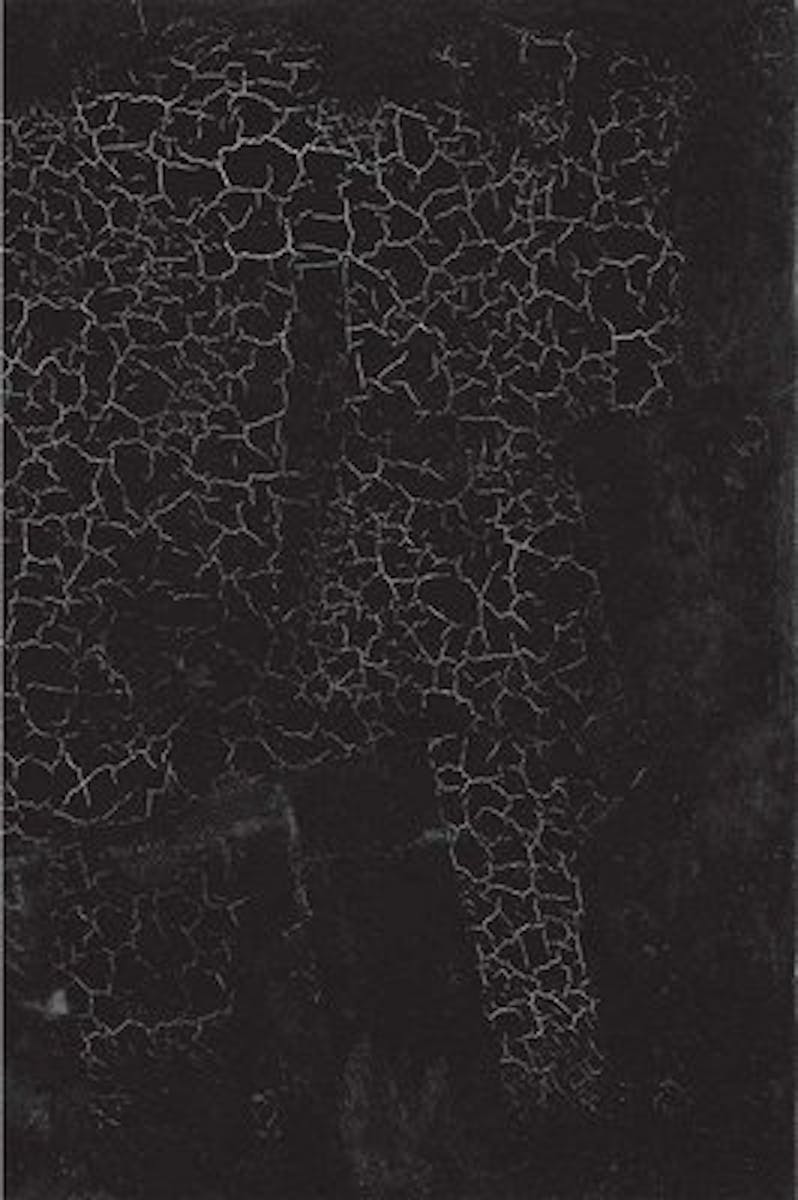
Kasimir Malevich, Black Square, 1915 — Source. The texture on the black is due to the painted surface cracking over time.
Kasimir Malevich’s 1915 Black Square is surely one of the most extraordinary paintings ever produced. On the one hand, Malevich considered the picture to be the ultimate work, taking the practice of art as far as it could possibly go. As an unremitting expanse of the darkest colour, it offered the maximum possible visual experience; there was no work of art that was not somehow implicitly present in it. Hence his name for the style: Suprematism. On the other hand, Black Square seemed to bring the history of art to a conclusive end. It consummated a process that was started by the Impressionists in the 1870s — the dismantling of art’s visual language into its component parts. Following centuries of naturalistic representation, during which the visual arts had revolved around their subject matter, artists now became interested in the language of art itself, eventually reducing it to its bare essentials — colours and forms — at the expense of subject matter. The result was abstract art. Malevich took this process a step further by claiming that not only should “pure art” be free of any dependence on subject matter for its expressive effect, but that creativity no longer needed art through which to manifest. Eventually even the convention of art could be dispensed with: creative consciousness would stand free — immediately, or unmediated. Black Square was a sign that this philosophical task had been accomplished. It was the “final” work of art; but it was also an iconic and magical object, intended to propel viewers beyond themselves, and beyond all difference in the world, into a state of undifferentiated non-objectivity.
Given its role, as envisaged by the artist, in the spiritual advancement of mankind, it was important to Malevich that Black Square should seem unprecedented. And there is indeed nothing remotely like it in the earlier history of fine art. But strangely, the painting did have precedents in other fields. In fact, although a black square (or rectangle) would seem — at first glance — to be a laconic, and even terse, sign, it has, over the centuries, proven itself to be extraordinarily elastic in its potential as a conveyor of meaning. The contexts in which it appeared are remarkably diverse, ranging from mourning and comedy, to metaphysics and politics. Although Malevich is unlikely to have known many, if any, of these precedents, they throw an uncanny light on his work, reflecting its own polyvalence.

Robert Fludd’s black square representing the nothingness that was prior to the universe, from his Utriusque Cosmi (1617). On each side of the square is written “Et sic in infinitum…” (And so on to infinity…” — Source.
Some of these precedents are reasonably well known — for instance, the astrologer-physician Robert Fludd used a black square to represent the universe before the world was created, in his 1617 Utriusque Cosmi (or History of Two Worlds). And in 1759, Laurence Sterne inserted an entirely black page into his rambling novel The Life and Opinions of Tristram Shandy, Gentleman as a self-consciously exaggerated acknowledgement of the death of the parson Yorick. In fact, Tristram Shandy represents something of a turning point in the history of Malevich’s precursors. As a memorial, its black page stands at the tail end of a tradition of “mourning pages”, which were occasionally included in books from the fifteenth century onwards as signs of abject grief. For instance, a book of devotions in the British Library from around 1500 includes several hand-painted black pages, suggesting the utterly desolate state of the world following the crucifixion and death of Christ. Each page is overlaid with an evenly spread web of red beads, depicting the drops of blood that fell from his wounds. While concentrating the painter’s infinite anguish at the suffering of Christ into a moment of unyielding blackness, the image also serves as a trigger for the viewer. The image is not simply symbolic; the totality of its bleakness, contained only by the edges of the page, has a positively traumatic effect, albeit a miniaturised one.

Black pages with red drops of blood, signifying the wounds of Christ, from a psalter and rosary of the Virgin, ca. 1500. The recto is worn from devotional engagement, damaged through kissing and rubbing, perhaps — Source.
In the seventeenth century, this mourning tradition was perpetuated in a secular context. Books of elegies, commiserating the deaths of eminent persons, sometimes had several pages — one facing each page of text — on which nothing but a black rectangle was printed. One example — A kingly bed of miserie in which is contained, a dreame with an elegie upon the martyrdome of Charls, late King of England — was produced to lament the execution of Charles I in 1649. Its text is characteristically intense, though not without a certain vain artistry. On one page, the author of the verses, John Quarles, bewails, in a positively Shakespearean manner: “My shivering body, oh what stormy weather / was that, which violently tost me hither; / where am I now? What rubicundious light / is this? that bloodyes my amazed sight?” One must suppose that while poring over the words, a reader would, from time to time, plunge his mind into the dark wordless oblivion that also presented itself to him on the facing page. The funerary implications of a black square were clearly evident to Malevich. Apart from using the image to herald the “death of art”, one of his later Black Square paintings (painted for an exhibition in the 1920s) was hung over his bed when he died in 1935, acting both as an expression of grief and as a portal into the beyond.


Photograph of the deathbed of Kasimir Malevich, surrounded by his works, 1935 — Source (not public domain).
By the middle of the eighteenth century, the fervent sophistication of black pages had passed out of fashion, in favour of a more genteel and modest style of mourning. In fact, black pages had come to seem mannered and slightly ridiculous. Thus although Sterne was subscribing to the tradition of using them as a sign of respectful grieving, he was also lampooning it as an absurd artifice — there are several other transgressions of literary conventions in Tristram Shandy which contribute to its overall status as a quirky, comedic work.
It is not inconceivable that Malevich knew of Tristram Shandy. In the early 1920s, the literary critic Viktor Shklovsky regarded the novel as a precedent for some of the a-logical futurist “zaum” poetry that was being written in Russia when Malevich was working on Black Square. Its innovations were not only amusing; they also interrupted people’s thought patterns — a process which, taken to an extreme, could alter the reader’s state of consciousness. Malevich also related to absurdity in this way. The paintings he produced immediately before developing Suprematism (for instance, An Englishman in Moscow, 1914) incorporate elements of cut-up pictures and words, giving rise to a thoroughly irrational image. Some of them include flat shapes of a single colour that we now know, with the benefit of hindsight, would eventually rise to the surface and completely eclipse the paintings’ incongruous details, in favour of Suprematist abstraction. In fact, X-rays reveal that Black Square was itself painted over an a-logical work, indicating that it is a continuation of the absurdist journey rather than a brusque replacement of it. Thus, not un-like the black page in Tristram Shandy, Malevich’s Black Square is both reverent and subversive.

The black page of The Life and Opinions of Tristram Shandy, Gentleman as it appears in the first edition, printed 1759–67. Photograph by Ian Campbell Ross of his personal copy — Source.
X-rays have also revealed traces of a vanished inscription on the border of Black Square that seems to link the picture with another early black page. The words of the inscription (which is only partly decipherable) are “battle of negroes”. This brief reference relates the work to an absurdist booklet, published in Paris in 1897. The booklet — Alphonse Allais’ Album Primo-Avrilesque (April Fool’s Day Album) — features seven monochromatic pages, in seven different colours. The pages’ captions reveal that, in each case, the objects depicted in the foreground are (supposedly) the same colour as the background and therefore cannot be distinguished from it: for red, “Apoplectic cardinals harvesting tomatoes on the shore of the Red Sea (an effect of Aurora Borealis)”; for yellow, “Jaundiced cuckolds handling ochre”. The caption for the black page reads “Combat de nègres dans une cave, pendant la nuit” (Negroes fighting in a cellar, at night). The humour was not Allais’ alone, but a refashioning of Paul Bilhaud’s all-black 1882 painting for the Salon des Incohérents, which came with a similar title. The treatment of race, here, undermines Bilhaud and Allais’ playful tone: without illumination, Black bodies appear to become seamlessly undifferentiated from darkness and violence. But what was Malevich’s relationship to these absurdist images? The Album Primo-Avrilesque was certainly known in Russia before 1915. In 1911, Malevich’s colleague Mikhail Larionov organised an exhibition in which pride of place went to a black ink poster with white spots called A Battle of Negroes at Night. But how the inscription found its way on to Malevich’s painting, and whether he was even responsible for its writing or erasure, is unclear. The message bears little relationship to Malevich’s other reflections on the work, though its presence is perhaps consistent with the fact that Black Square was not intended to represent a purist architectural ideal; the painting was pervaded by provocation and complexity.

Paul Bilhaud, Combat de Nègres pendant la nuit (A Combat of Negroes at night), 1882. In 2021, this long-lost painting was rediscovered, among other works of the Incoherents, in an attic trunk — Source (© Galerie Johann Naldi).

Alphonse Allais, Combat de Nègres dans une cave, pendant la nuit (Negroes fighting in a cellar, at night), from his Album Primo-Avrilesque (April Fool’s Day Album), 1897 — Source.
There were in fact several occasions in the nineteenth century when black rectangles were used on account of their absurdity. They can be divided into a number of thematic groups. Some were presented as framed pictures, ridiculing paintings in public exhibitions that were deemed incomprehensible, usually because they were more atmospheric than descriptive. Première Impression du Salon de 1843, a satirical supplement produced by Raymond Pelez for the Parisian magazine Le Charivari in 1843 is a case in point. In that work, a painting of a “night effect” is so dark that it has become an expanse of pure blackness. In a German work of 1867, an “effect painting” is rendered in the same way, with scribble marks to reflect the confusion of its viewers. In other works, blackness simply signifies the absence of light.

Raymond Pelez’s salon caricature, “First Impression of the Salon of 1843”, for Le Charivari (Paris, 1843). The framed black painting is captioned: “Effect of night, unlit by moonlight, quickly bought by Mr. Robertson, maker of shoe polish.“ — Source.

Illustration titled “Effectmalerei” (Effect Painting), possibly by Friedrich Weigand, for an 1867 issue of the Munich weekly Fliegende Blätter. Translated, the caption reads: “‘Audience: “What is that fellow doing with that pike?’ Halberdier: ‘Back there! You don’t come close to such a picture, it’s painted with effect; all back, even further back, the further the better!’” — Source.
A book of songs and stories by the German theatre director Franz Graf von Pocci, dating to 1845, used the device to illustrate a tale about a theatrical performance that descends into chaos when the lights fail. L’Histoire de Monsieur Lajaunisse, the story of a hapless Mr Bean-like character, published in 1839 by CHAM (“father of the strip cartoon”) includes two adjacent black rectangles to cover episodes in the story which took place in total darkness: having blown out his candle, and ready for sleep, Monsieur Lajaunisse climbs into his bed only to be confused by its hardness. It transpires that he had climbed into a chest of drawers by mistake.


Adjacent black panels from CHAM, Histoire de Mr. Lajaunisse (Paris, 1839). The captions describe Lajaunisse, in darkness, mistaking his bed for a chest of drawers — Source.

Confusion and ignorance were frequently represented by fields of blackness. In 1848, the mental state of the muddled Monsieur Reac, a conman whose antics were narrated by the photographer Nadar in comic strip style, was depicted as a chaotic tangle of black lines. But the blackness of ignorance was not always comic. In his historical atlas of 1830, Edward Quin attempted to convey the history of the world through a series of maps — not as it was at any given time, but only as it was known (by European historians). Those parts of the world that were not known were overlaid by the darkness of ignorance. The author explained how the same scale was used throughout the work to give an accurate impression of the relative state of human knowledge of the world at different periods. Given the limits of man’s knowledge at the earliest stages of human history, it is not surprising that most of the earliest maps in the sequence are covered in black. Malevich’s Black Square resonates with each of these precedents. Both empty and full, it preceded and succeeded the certainty of rational knowing.

Nadar, “La Vie Publique et Privée de Mossieu Réac” (The Public and Private Life of Mister Réac), part of the artist’s ten-part series for La Révue comique (Paris, 1848). Here the chaotic and confused state of the incompetent opportunist hero’s affairs is represented as a scribbled haze of blackness — Source.

A map, engraved by Sidney Hall, of geographical knowledge as known during The Deluge (2348 BC), from Edward Quin’s Historical Atlas: In a Series of Maps of the World as Known at Different Periods (London, 1830) — Source.
In the twentieth century it was not just mental states and knowledge that were represented by fields of blackness; it was the very experience of life. In 1912, the American architect and writer Claude Bragdon compared human consciousness to the way in which a two-dimensional plane would register a three-dimensional cube passing through it — as a sequence of shapes, rather than as a solid. In their essential natures, Bragdon surmised, human beings were like cubes, but in the plane of life, we only get to experience ourselves as a series of cross-sections. If we pass through the plane of life perpendicular to it, with consistency and rectitude, we will experience ourselves as squares; but if we pass through it semi-randomly and obliquely, we will experience ourselves as an erratic sequence of irregular shapes. Bragdon’s ideas were known in Russia and Malevich may have been influenced by them. Black Square was not simply a two-dimensional surface, parallel to a single wall and projecting outwards from it in one direction. Judging from the way it was displayed when first exhibited in 1915 — across the corner of the room (like a Russian icon) and as high up as possible — it was required to project from two walls and the ceiling, i.e. in three dimensions, embracing the room over which it presided as a cubic space.

Two diagrams from Claude Bragdon, Man the Square: a Higher Space Parable (Rochester: Manus Press, 1912) — Source.

Exhibition of Black Square and other works by Kasimir Malevich at “The Last Futurist Exhibition, 0.10”, Petrograd, 1915 — Source.
Although Black Square is above all a metaphysical painting, Malevich did expect it to have political resonance. His association of the sign with anarchism may have been prompted by an anarchist group called “The Black Banner”, which had established itself in Russia in 1903 and which used a black flag as its emblem. Indeed Malevich sometimes used the Black Square as a banner for his own cause, as can be seen in a celebrated photograph of him with students travelling by train from Vitebsk to Moscow in 1920. Blackness was also projected on to Russia from abroad, sometimes with political overtones. In Gustave Doré’s L’Histoire de la Sainte Russie (1854), the origins of Russia are represented as an area of black nothingness. The frame is captioned “The origins of Russia are lost in the darkness of antiquity”. Malevich may have agreed with these words, but he would not have agreed with Doré’s interpretation of them. For Malevich, the dark origins of Russia were natural, pure and energetic, unspoiled by western pretensions to civilisation; for Doré, they signified the country’s barbarism and lack of culture. Given that the book was written by a Frenchman during the Crimean War (1853–56), which pitted Russia against France, Great Britain, and the Ottoman Empire, the patronising and mocking tone of the work is perhaps not surprising.

Members of UNOVIS (Утвердители НОВого ИСкусства — Champions of the New Art), a group of artists inspired by Suprematism, at Petrograd’s Vitebsk Station, 1920. Kasimir Malevich can be seen in the centre — Source.

Page from Gustave Doré, L’Histoire pittoresque, dramatique et caricaturale de la sainte Russie (Paris, 1854). Translated, the black panel’s caption reads: “The origins of Russia are lost in the darkness of antiquity” — Source.
Another work in which Russia is associated, albeit coincidentally, with a framed black square is a supplement from a British journal, The Graphic, published in 1875. The sheet documents the War Strength of the European Powers in 1874 in a series of diagrams. At the top, the areas of the territory of Great Britain, Germany, Italy, France, Austro-Hungary, and Russia are represented as squares, with their colonies and dependencies (where the countries had them) shown as borders. As the caption clarifies: “SOLID BLACK represents Russia”. The extended territory of the Russian Empire, which then included parts of Poland, Ukraine, and Belorussia, is represented by the pale shaded area around it; the relative sizes of Great Britain and Ireland, and their colonies, are shown to the left, in solid red and pink respectively.

One can only wonder whether the designer of this page chose black for Russia and red for Great Britain purposefully — as if to signify that Britain’s colonial agendas were more sympathetic and less harsh than those of Russia; it is not inconceivable. Whatever the case, the decision raises questions regarding the physiological effect that a square or rectangle of blackness can have on its viewers. Each of the examples referenced here is deeply situated in a highly specific context that determines its meaning. Indeed, these contexts are so integral to the overall significance of the motif that they can completely alter it, ranging from one extreme (for instance, misery) to its opposite (slapstick humour) with ease. Remarkably, Malevich’s Black Square functions in all of these contexts: mourning, comedy, epistemology, politics, etc. But while these contexts are able to throw light on his great painting, what they are unable to account for is its sheer guttural force. It evades the ultimate rationalisation, which is exactly what it was conceived to do. Maybe there is something fundamental about this. Human beings attempt to understand the world by identifying objects — assessing their degrees of similarity and difference, their consistency, their rates of change and repetition. The patterns that emerge from this reduction of the indeterminate totality of experience to a web of infinite relationships between things enable people to cohere as subjects. For a moment, Black Square frustrates this impulse to understand the world by simplifying it to a system of relationships, for it offers no relationships. Consequently, the coherence of the subject is momentarily undermined; consciousness stands free and unafraid. Black Square is tragic; it’s absurd; it can be bewildering or funny; it’s certainly metaphysical; and now it serves as a precursor for works and projects yet to be imagined.
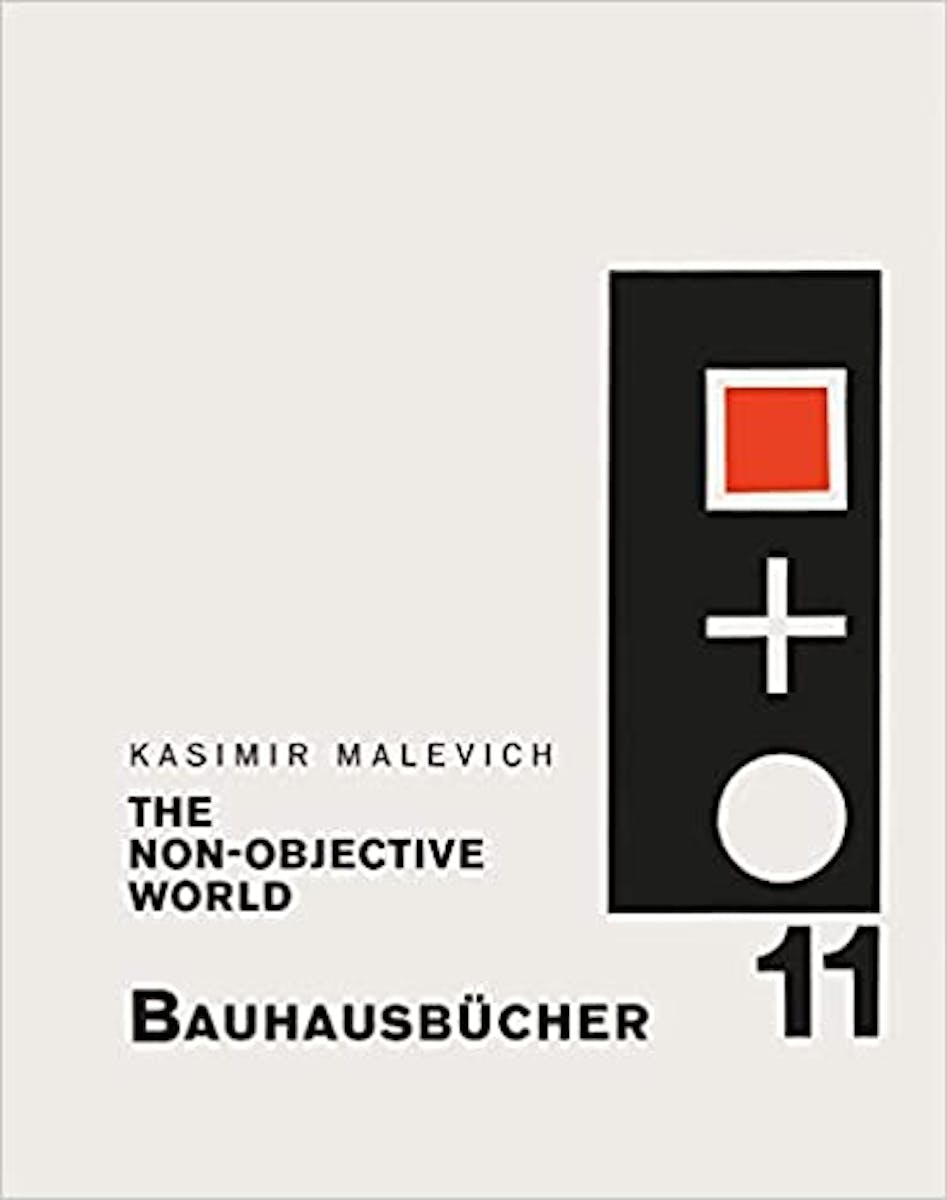
- The Non-Objective World
A facsimile of the gorgeous Bauhaus edition of Malevich's classic treatise on Suprematism. Kasimir Malevich (1879–1935) debuted his new creative theory of basic geometric shapes with the publication of his Suprematist manifesto in 1915. He later published a follow-up entitled The Non-Objective World in 1927, which further elucidated his vision of an art that emphasized the “primacy of pure feeling”. As part of the publisher’s ongoing Bauhausbücher series, Lars Müller’s facsimile edition of Malevich’s text is translated into English with the original design and typography.
- Black Square: Malevich and the Origin of Suprematism
None of Malevich's contemporary revolutionaries created a manifesto, an emblem, as capacious and in its own way unique as this work; it became both the quintessence of the Russian avant-gardist’s own art — which he called Suprematism — and a milestone on the highway of world art. Writing about this single painting, Aleksandra Shatskikh sheds new light on Malevich, the Suprematist movement, and the Russian avant-garde.
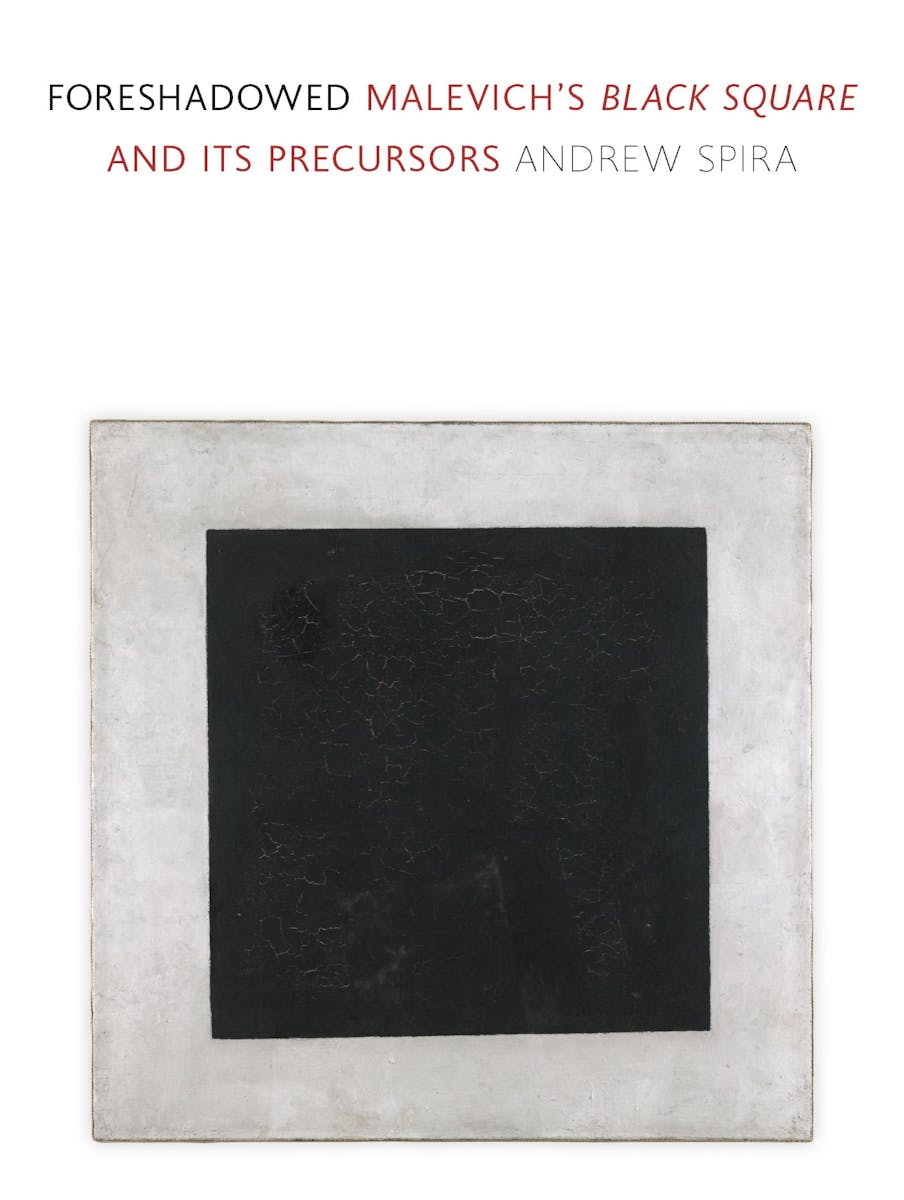
- Foreshadowed: Malevich’s Black Square and Its Precursors
When Kasimir’s Malevich’s Black Square was produced in 1915, no one had ever seen anything like it before. And yet it does have precedents. In fact, over the previous five hundred years, several painters, writers, philosophers, scientists, and censors — each working independently towards an absolute statement of their own — alighted on the form of the black square or rectangle, as if for the first time. This book explores the resonances between Malevich’s Black Square and its precursors, showing how a so-called genealogical thread binds them together into an intriguing, and sometimes quirky, sequence of modulations.
The Public Domain Review receives a small percentage commission from sales made via the links to Bookshop.org (10%) and Amazon (4.5%). Thanks for supporting the project! For more recommended books, see all our “Further Reading” books, and browse our dedicated Bookshop.org stores for US and UK readers.
Born in London, Andrew Spira graduated from the Courtauld Institute, before working at the Temple Gallery (specialists in Byzantine, Russian and Greek icons) where he developed a passion for Russian art. For several years, he was a curator at the Victoria and Albert Museum, focusing on the metalwork collections and the British Galleries. He subsequently joined Christie’s Education where he was a Programme Director for fourteen years. Throughout this time he has been writing, teaching, curating and leading tours to cultural sites all over Europe, as well as to Armenia, Georgia and Turkey. He has published several books: The Avant-Garde Icon: Russian Avant-Garde Art and the Icon Painting Tradition (Lund Humphries, 2008); The Invention of the Self: Personal Identity in the Age of Art (Bloomsbury, 2020); Simulated Selves: The Undoing of Personal Identity in the Modern World (Bloomsbury, 2020); and Foreshadowed: Malevich’s Black Square and its Precursors (Reaktion, 2022). His website: www.andrewspira.com.